Convergence Thesis: KW22/2026

The AI Species – Weekly Convergence Briefing

KW22/2026: When the Rails of the Machine Economy Become Visible

Dear readers,

the calendar week 22 of 2026 will, in retrospect, likely be remembered as one of those quiet but tectonic moments in which the abstract architecture of the machine economy materialized into concrete institutional facts. Within a span of just seven days, we have witnessed Wall Street’s most respected investment banks projecting a one-trillion-dollar wave of crypto-IPOs, a chartered U.S. national bank issuing its own stablecoin to fifteen million retail customers, a major asset manager pushing a tokenized fund onto a decentralized lending protocol, and a substantive industry report confirming that AI agents are increasingly bypassing traditional card rails to settle their economic activity in stablecoins. According to Jefferies’ projection reported by CoinDesk, the convergence of tokenization and institutional capital allocation could mature into a market of staggering proportions over the next twenty-four months — a figure that, taken seriously, implies a structural rerating of the entire digital asset class.

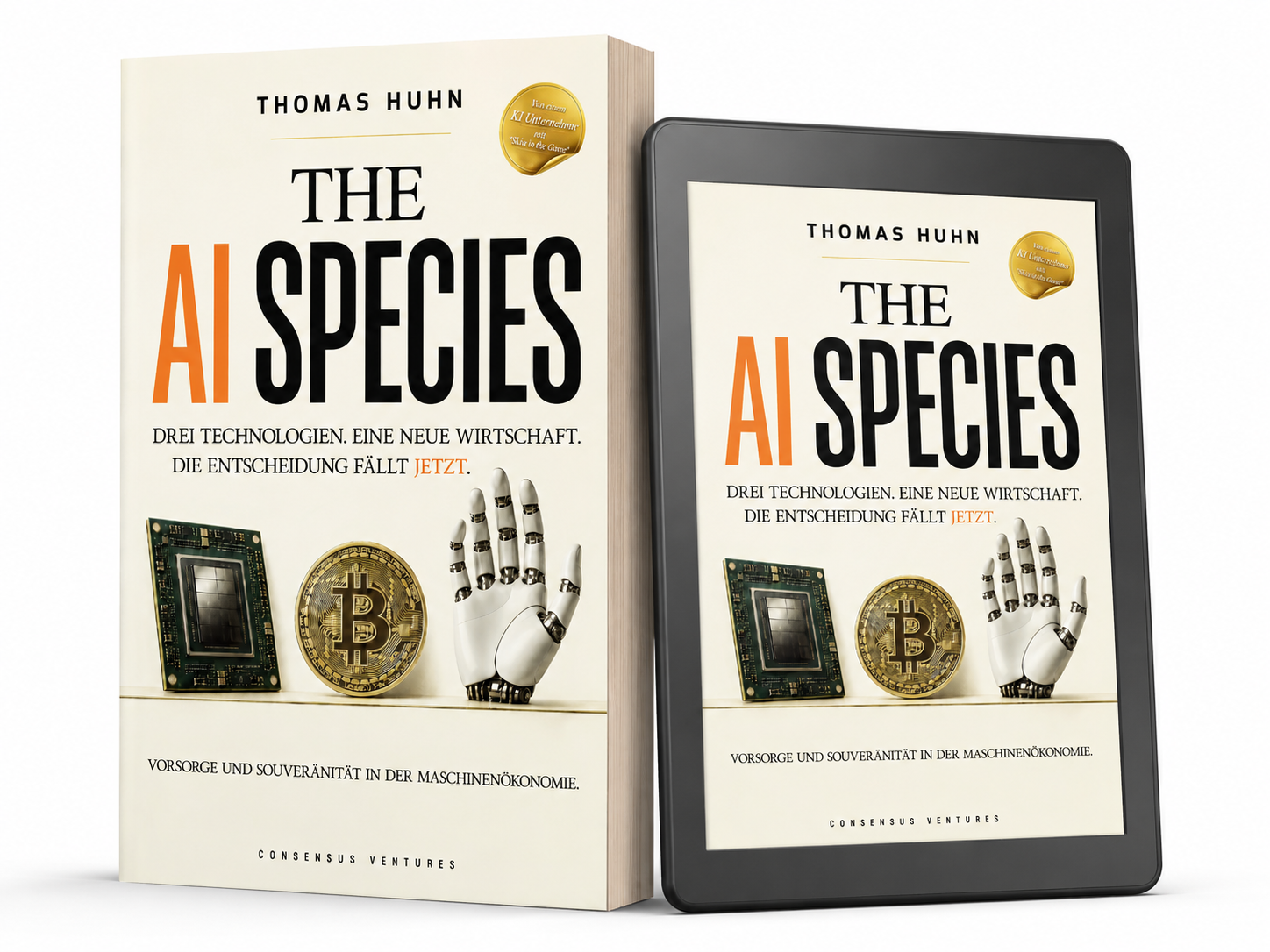
The weekly thesis is therefore unambiguous: the three pillars of what I described in The AI Species as the emerging machine economy — autonomous artificial intelligence, programmable capital on blockchain rails, and embodied robotics — are no longer evolving in isolated silos. They are now visibly interlocking. The financial plumbing is being rebuilt to be machine-readable; the legal and regulatory frameworks are being explicitly designed around agentic actors; and the physical world is being progressively populated by autonomous mobility systems that themselves will become economic counterparties. This newsletter dissects the most consequential developments along four axes — AI & Agents, Robotics, Crypto & Tokenization, and Infrastructure & Regulation — and attempts to draw the strategic synthesis investors urgently need.


1. AI & Agents: The Industrialization of Adversarial Pressure Testing

The most underappreciated story of the week may be the simultaneous publication of two reports that, read together, expose the fragile underbelly of frontier artificial intelligence. Cisco Systems released findings indicating that no closed flagship large language model currently in production can be considered safe once a multi-turn adversarial attack is initiated, as documented by SiliconANGLE. In parallel, AI security startup Gray Swan closed a forty-million-dollar financing round to scale a distributed army of roughly fifteen thousand red-team hackers, whose sole purpose is to pressure-test Claude, GPT-5, Gemini and other frontier systems, according to Rashi Shrivastava in Forbes.

The economic implications of these two data points are substantial and, I would argue, structurally bullish for what I call the “AI assurance layer” — the constellation of firms providing audit, security, compliance and adversarial testing for autonomous systems. As the locus of value creation shifts from chatbots toward agents that can execute transactions, sign smart contracts, and move capital autonomously, the marginal cost of a single successful jailbreak rises dramatically. A multi-turn vulnerability that leaks a system prompt is an inconvenience; the same vulnerability in an agent holding a stablecoin wallet is a directly monetizable exploit. We should therefore expect a new tier of insurance products, custody requirements, and possibly mandatory third-party attestation regimes to emerge around any AI agent that touches financial rails.

This insight is reinforced by the legislative front. Illinois passed what is being described as America’s strongest state-level AI safety bill, requiring frontier developers including OpenAI, Anthropic, and Google to undergo third-party verification of their adherence to safety standards, as reported by WIRED. This pattern — state-level regulation outpacing federal action — mirrors the early evolution of data privacy legislation, and it tells us that the cost of compliance for frontier AI labs will become a permanent operating expense rather than a one-time engineering project. For investors, this means margin compression at the model layer and margin expansion at the assurance, audit, and infrastructure layers. It is a reallocation thesis, not a rejection thesis.


2. Robotics: The Slow Reality of Autonomy Meets the Fast Reality of Geography

Robotics had a week of contradictions that perfectly illustrate the asymmetry between marketing narratives and operational truth. On one hand, Waymo continued its methodical, almost surgical territorial expansion, now mapping Alexandria and preparing to cover Arlington — placing its self-driving fleet directly within sight of the United States Capitol, as reported by WIRED. This is not merely a geographic milestone; it is a political one. By embedding autonomous mobility in the daily commute of federal staffers, lobbyists, and lawmakers, Waymo is normalizing robotaxis at the precise location where the regulatory future of autonomy will be written. The social legitimacy this generates is perhaps best illustrated by a moving New York Times feature describing how visually impaired riders experience genuine independence for the first time. Such stories accumulate political capital that no lobbying budget can purchase.

On the other hand, Reuters published a deeply researched investigation revealing that even Tesla’s own AI trainers do not trust the company’s full self-driving technology or the safety statistics the company publishes, as documented by Reuters. Given that a substantial portion of Tesla’s 1.6-trillion-dollar valuation rests on the premise of imminent unsupervised autonomy, this is not a minor reputational issue but a fundamental valuation question. The market has effectively priced Tesla as if the autonomy problem were already solved at the architectural level and only deployment remained. The Reuters reporting suggests the opposite: that the gap between supervised driver assistance and true autonomy is broader, more empirical, and more dependent on operational design domain restrictions than the marketing implies.

Into this gap steps Mercedes-Benz, which announced the rollout of its urban point-to-point assisted driving system in Germany from the end of 2026, according to Reuters. The Mercedes approach — incremental, geographically constrained, conservatively marketed — is converging with the Waymo approach. Two divergent technological philosophies (camera-only generalist learning versus sensor-fusion plus high-definition mapping) are producing two divergent commercial outcomes. For the investor reading The AI Species through this lens, the conclusion is uncomfortable but clear: the autonomy thesis is real, but the timeline is being recalibrated, and the winners may not be those with the largest fleets but those with the most defensible operational design domains.


3. Crypto, Stablecoins, and Tokenization: The Bank Becomes a Wallet

If autonomy is moving slower than expected, the financialization of blockchain rails is moving faster. The single most consequential corporate decision of the week was SoFi’s launch of SoFiUSD, a dollar-backed stablecoin issued on Ethereum and Solana, making SoFi the first U.S. national bank to offer a stablecoin directly to its fifteen million retail customers, as reported by CoinDesk. The strategic significance here is hard to overstate. For roughly a decade, the stablecoin market has been dominated by non-bank issuers operating in regulatory grey zones. With SoFi’s move, the issuance of programmable, blockchain-native dollars enters the federally supervised banking perimeter, which means the next wave of stablecoins will be issued by entities that already hold Federal Reserve master accounts, FDIC insurance, and direct relationships with payment networks.

This development must be read alongside the Keyrock report, highlighted by CoinDesk, which provides empirical evidence that stablecoins on blockchain rails are emerging as the default settlement layer for AI agent payments — and that Coinbase, Stripe, and Visa are racing to position themselves in this stack. The convergence story I outlined in The AI Species — autonomous software agents transacting in programmable money — is no longer a forecast; it is an operational reality being measured in transaction volume. Card networks, optimized for human-paced retail commerce with chargeback windows of weeks, are structurally unsuited for sub-second, machine-to-machine settlement at fractional-cent granularity. Stablecoins on high-throughput chains are.

The institutional adoption pattern is reinforced from the asset management side. VanEck’s tokenized fund went live on Euler, a leading DeFi lending protocol, as reported by CoinDesk. This is structurally significant because it represents not merely a tokenization of a traditional product, but its active integration into composable DeFi infrastructure — a tokenized fund that can serve as collateral, that can be lent, that can participate in liquidity provision. The boundary between traditional finance and decentralized finance is dissolving from both directions simultaneously. In parallel, REAL Finance signed its first securities tokenization agreement with the licensed investment firm Factori AD, as reported by TradingView, confirming that the tokenization wave is no longer confined to the largest names but is permeating the mid-market.

Not all jurisdictions move at the same pace, however. The European Central Bank rebuffed proposals from EU finance ministers to boost euro stablecoins, citing risks to bank lending and financial stability, according to Reuters. This is a strategically costly decision. While the United States permits its national banks to issue dollar stablecoins, and while AI agents increasingly settle in dollar-denominated tokens, the eurozone is voluntarily ceding the agentic payment layer to a foreign currency. The long-term implications for euro monetary sovereignty in a machine economy are, in my assessment, severely underestimated by European policymakers.


4. Infrastructure, Regulation, and the AI-Fintech Frontier

The plumbing layer received considerable attention this week. The proposed Digital Asset Market Clarity Act of 2025 is expected to compel crypto firms to shift from passive, opaque yield mechanisms toward active, compliant capital strategies, as reported by CoinDesk. This regulatory clarity, paradoxically, is bullish for the institutionalization of crypto: clear rules reduce the regulatory risk premium that has kept pension funds, sovereign wealth funds, and insurance balance sheets on the sidelines. A regulated “yield-as-a-service” market is precisely the substrate that AI treasury agents — autonomous capital allocators — need in order to deploy capital programmatically across compliant venues.

At the convergence frontier itself, Luffa AI raised strategic equity from GoFintech Quantum at a 220-million-dollar valuation, as reported by TradingView. The valuation itself matters less than what it signals: capital is now flowing specifically toward firms positioned at the Web3-AI intersection, not at either domain in isolation. The terminology of the funding announcement — “AI plus fintech frontier” — confirms that the convergence thesis has now reached the language of conventional venture capital.


5. Strategic Synthesis: The Full Stack Comes Into View

When we step back from these individual data points, a coherent architecture becomes visible. At the base layer, we have programmable money issued by chartered banks (SoFi), denominated in dollars, settling on public blockchains. Above that sits the tokenized asset layer (VanEck on Euler, REAL Finance with Factori), where traditional securities become composable DeFi primitives. Above that sits the agentic execution layer (the Keyrock-documented shift toward AI agents paying in stablecoins), where autonomous software acts as economic counterparty. And surrounding all of this is the emerging assurance and regulatory layer — Cisco’s vulnerability research, Gray Swan’s adversarial testing army, the Illinois safety law, the impending Clarity Act, and the conspicuous European hesitation.

This is, in essence, the full stack of the machine economy that I described in The AI Species. The week’s news has not introduced new theoretical concepts; it has hardened existing concepts into operational, capitalized, regulated reality. For investors, the strategic implications are threefold. First, the assurance and security layer around AI is dramatically underpriced relative to the rising stakes of agentic deployment. Second, the institutional rails for tokenization — custodians, compliant DeFi front-ends, regulated stablecoin issuers, tokenization platforms — are entering a phase of genuine cash-flow visibility, justifying the Jefferies one-trillion-dollar projection. Third, the autonomy thesis in robotics requires re-underwriting: the winners will be defined not by the largest fleets but by the most defensible, methodically expanded operational domains.

For the real economy, the meaning is equally concrete. A blind passenger gaining independence through a Waymo ride is the human face of a transformation that will, within a decade, restructure urban mobility, real estate values, insurance markets, and labor allocation in transport. A SoFi customer holding a bank-issued stablecoin is the human face of a transformation that will restructure cross-border payments, agentic commerce, and ultimately monetary policy transmission. These are not parallel revolutions; they are the same revolution viewed from different angles.


6. Outlook for the Coming Week

I expect three themes to dominate KW23. First, additional U.S. banks will likely follow SoFi’s lead in announcing stablecoin pilots, as competitive dynamics in retail banking accelerate. Second, we should anticipate further state-level AI safety legislation, with several states reportedly drafting bills modeled on the Illinois framework. Third, the autonomy debate will intensify as Reuters’ Tesla investigation prompts both regulatory scrutiny and renewed attention to the more conservative approaches of Waymo and Mercedes. Watch particularly for any signals from European policymakers reconsidering the ECB’s stablecoin position — the competitive cost of inaction is mounting weekly.

The convergence is no longer theoretical. It is being capitalized, regulated, and deployed in real time. Those who treat AI, crypto, and robotics as separate investment themes will, in my conviction, systematically misprice the integrated whole. The machine economy is a single phenomenon expressing itself across multiple substrates, and KW22/2026 is the week in which that singularity became impossible to ignore.

Yours sincerely, Thomas Huhn